About
On both banks of the Mahmoudiya
The district in brief
West District is Alexandria’s old west, on both banks of the Mahmoudiya canal between the Western Harbour and Downtown. Its northern edge is Khedive Street (formerly Sharif Street) and Asakel El Ghilal up to the wall of the customs zone; its eastern edge is El Attarin Mosque Street and Ragheb Pasha Street down to the wall of the National Spinning Company at Gheit El Enab, as the district’s document, published by Alexandria Governorate, sets it.
The district holds two qisms and 21 shiakhas: Karmouz with ten, among them Gheit El Enab, Nubar, Sidra and El Kara; and Mina El Basal with eleven, among them El Wardian, El Mafrouza, El Qabbari, Kom El Shoqafa and El Amoud.1
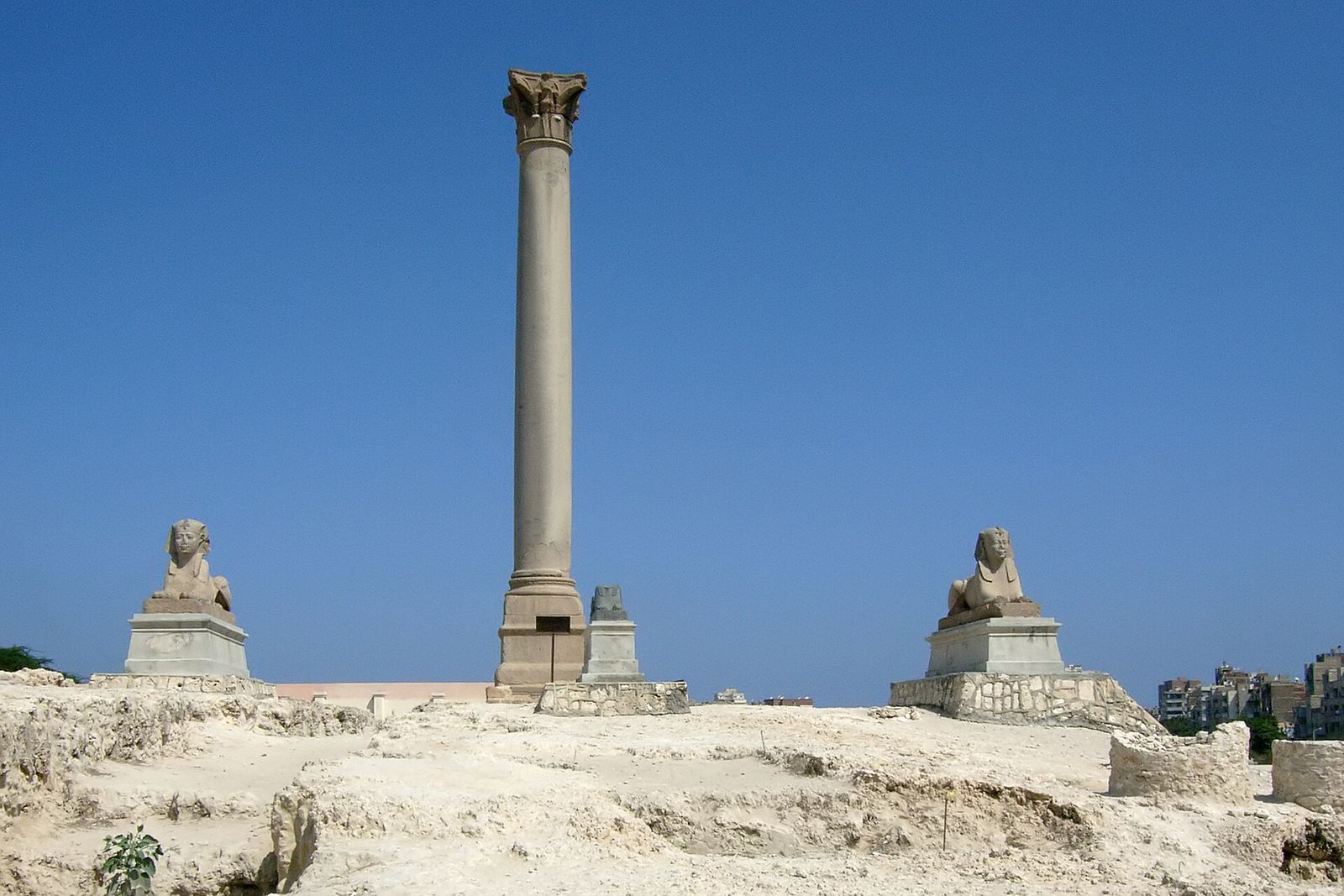
The district headquarters and its technology citizen service centre take residents’ requests; call the district on 03 4973116 to confirm the address before you visit. Within the district are Pompey’s Pillar and the Serapeum, the Catacombs of Kom El Shoqafa, Sidi al-Qabbari Mosque and the Mina El Basal Cotton Exchange.
The district in numbers
21
Shiakhas
2
Administrative sections
60+
Years since the district was created (1965)
The qisms and shiakhas as in the district’s boundary document; the year it was created from the district’s page on the governorate portal1
The district at a glance
Our vision for clearer services, protected heritage and a district that welcomes residents and visitors.
A safe, orderly district where every resident gets their service easily and clearly, and which keeps the antiquities and heritage of Karmouz and Mina El Basal.
Administrative sections
Two qisms: Karmouz and Mina El Basal, holding 21 shiakhas between them.
Karmouz
كرموز
Its ten shiakhas: Gheit El Enab East, Gheit El Enab West, Nubar, Gamea Sultan, Sidra West, Sidra East, Souq El Ghanam, Karmouz West, Karmouz East, El Kara1
- Population, estimate for 20172
- 104,326
Mina El Basal
مينا البصل
Its eleven shiakhas: El Wardian, Umm Kobeiba, El Mafrouza, Tabiet Saleh, Kafr Ashri, El Qabbari East, El Qabbari West, El Borsa, Kom El Shoqafa East, Kom El Shoqafa West, El Amoud1
- Population, estimate for 20172
- 253,187
Population figures are CAPMAS’s estimates, per qism, and are not added into one total.
Timeline
The Serapeum
The Ptolemaic period
On the hill of Bab Sidra, where the old village of Rhakotis stood, rose the Serapeum, one of the best known Ptolemaic temples, for the cult of Serapis, Isis and their son Harpocrates.
The Catacombs of Kom El Shoqafa
1st to 2nd century AD
The Kom El Shoqafa catacombs were cut three storeys deep into the rock in the Roman period, and stayed in use until the 4th century AD.
Pompey’s Pillar
About AD 300
The Alexandrians raised Pompey’s Pillar in red Aswan granite, most likely in honour of the Roman emperor Diocletian. Since the Crusades it has been wrongly called after Pompey.
Sheikh al-Qabbari
1264
The ascetic Sheikh Abu al-Qasim al-Qabbari died in 662 AH (1264) and was buried in his garden; a small mosque raised over his tomb was enlarged in the 19th century. The El Qabbari area is named after him.
The Mina El Basal Cotton Exchange
The 1870s
The cotton exchange at Mina El Basal grew up near the mouth of the Mahmoudiya canal and the harbour gates; its building is on the architectural heritage register as no. 535.
The catacombs found
1900
The Kom El Shoqafa catacombs were found by chance in 1900, after years of digging in the area.
Three districts
1965
Decision 1341 of 1965 of the Minister of State for Local Administration divided the city of Alexandria into three districts: East, Downtown and West.
The Gabbari necropolis
1997
The Gabbari necropolis came to light by chance in June 1997 while the Qabbari flyover was being built; the Centre d’Études Alexandrines excavated it until 2000.
The shiakhas’ boundaries
2016
In January 2016 Alexandria Governorate published West District’s document: its two qisms, its 21 shiakhas and the limits of each.
Our priorities
Four commitments that govern the district’s day-to-day decisions.
Automated, understandable service
Residents should know the documents their service needs before they visit the technology centre, and find reconciliation files, licences and complaints handled in one place.
Safe buildings
Following up buildings at risk of collapse, removing imminent danger, and stopping unlicensed building before it is finished.
Clean, orderly streets
Clearing waste and encroachments, mending street lights and pruning trees across both qisms, from Karmouz and Pompey’s Pillar to El Qabbari and El Wardian.
An open door for residents
Receiving complaints and requests at the district headquarters, and taking part in the governor’s public meeting for the western sector in the third week of each month.