
The story
Three storeys cut into the rock beneath ancient Rhakotis, with reliefs that join Egypt, Greece and Rome.
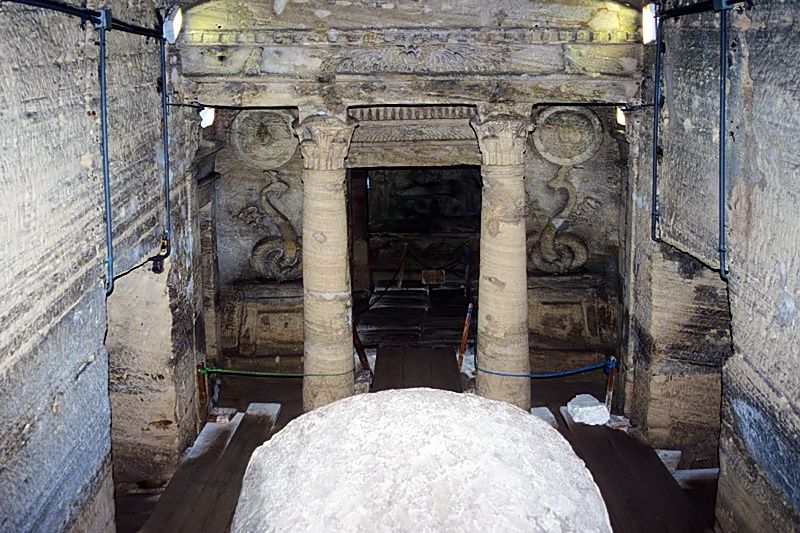
- 1The main tomb with its columns and serpent reliefs
- 2The three storeys cut into the rock
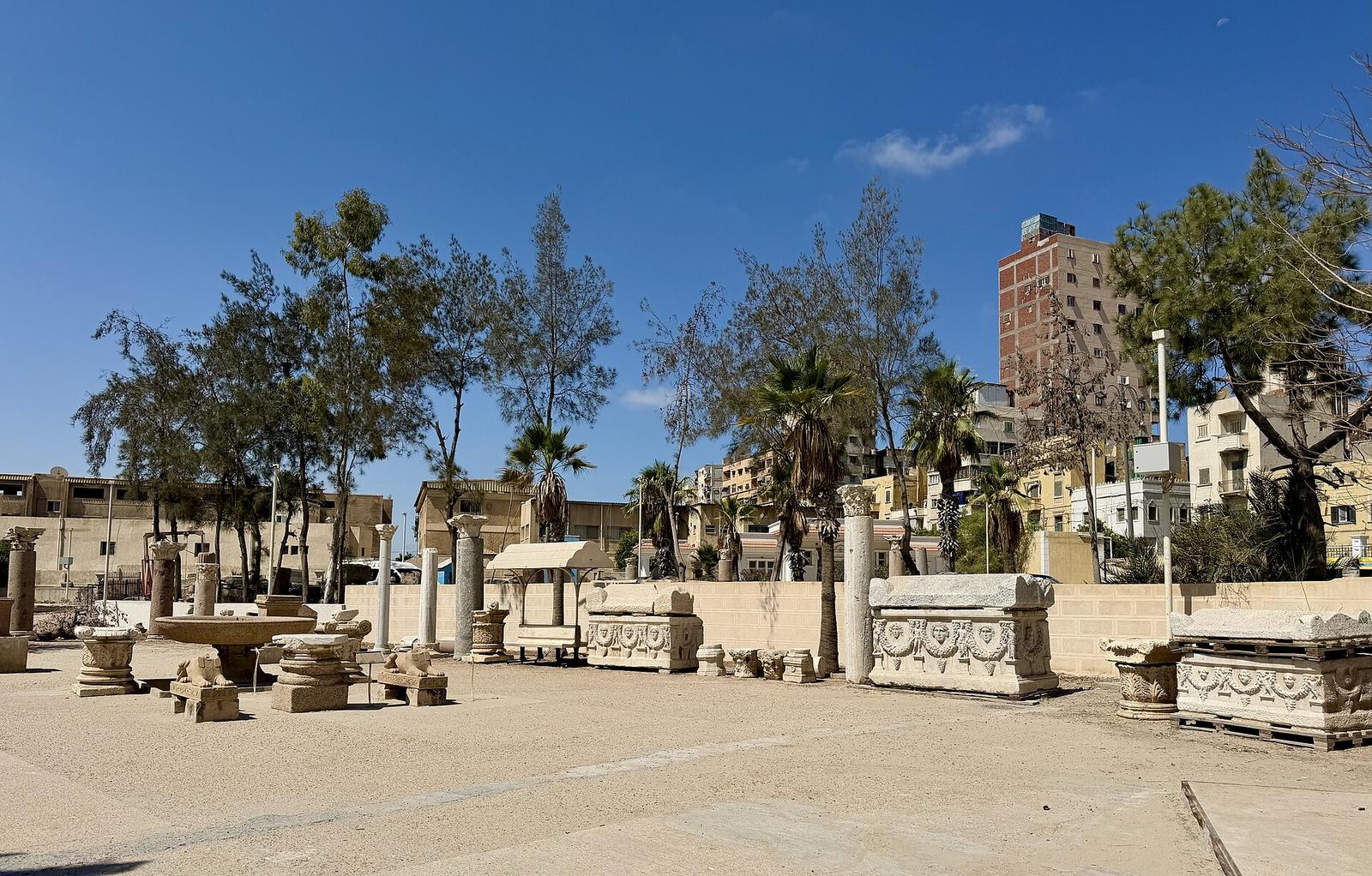
- 3The Wardian tombs in the court
- 4The sarcophagi and columns in the open-air court
The visitors’ guide on West District’s page says the cemetery lies on the north-western side of ancient Rhakotis, today’s Kom El Shoqafa, and is one of the finest cemeteries of the Roman Mediterranean, cut entirely into the rock three storeys deep.
Read more
The sources differ on its date: the district’s guide puts it at about the end of the 1st century AD, for a Roman family that had most likely taken on Egyptian ways, becoming a public cemetery from the 2nd to the 4th century; the governorate’s landmarks page dates it to the 2nd century AD and calls it unique for reliefs that join ancient Egyptian and Graeco-Roman art.
Al-Ahram Weekly (2025) says the cemetery was discovered by chance in 1900 and stayed in use until the 4th century, that a project to lower the groundwater, with a US grant of $5.7 million, was inaugurated in 2019, and that tombs reassembled from elsewhere in Alexandria, such as the Tigrane, Wardian and Salvago tombs, are now shown at the site.
The two Wardian tombs, Al-Dostor reported in 2019, were restored and moved to the Kom El Shoqafa site.