
The story
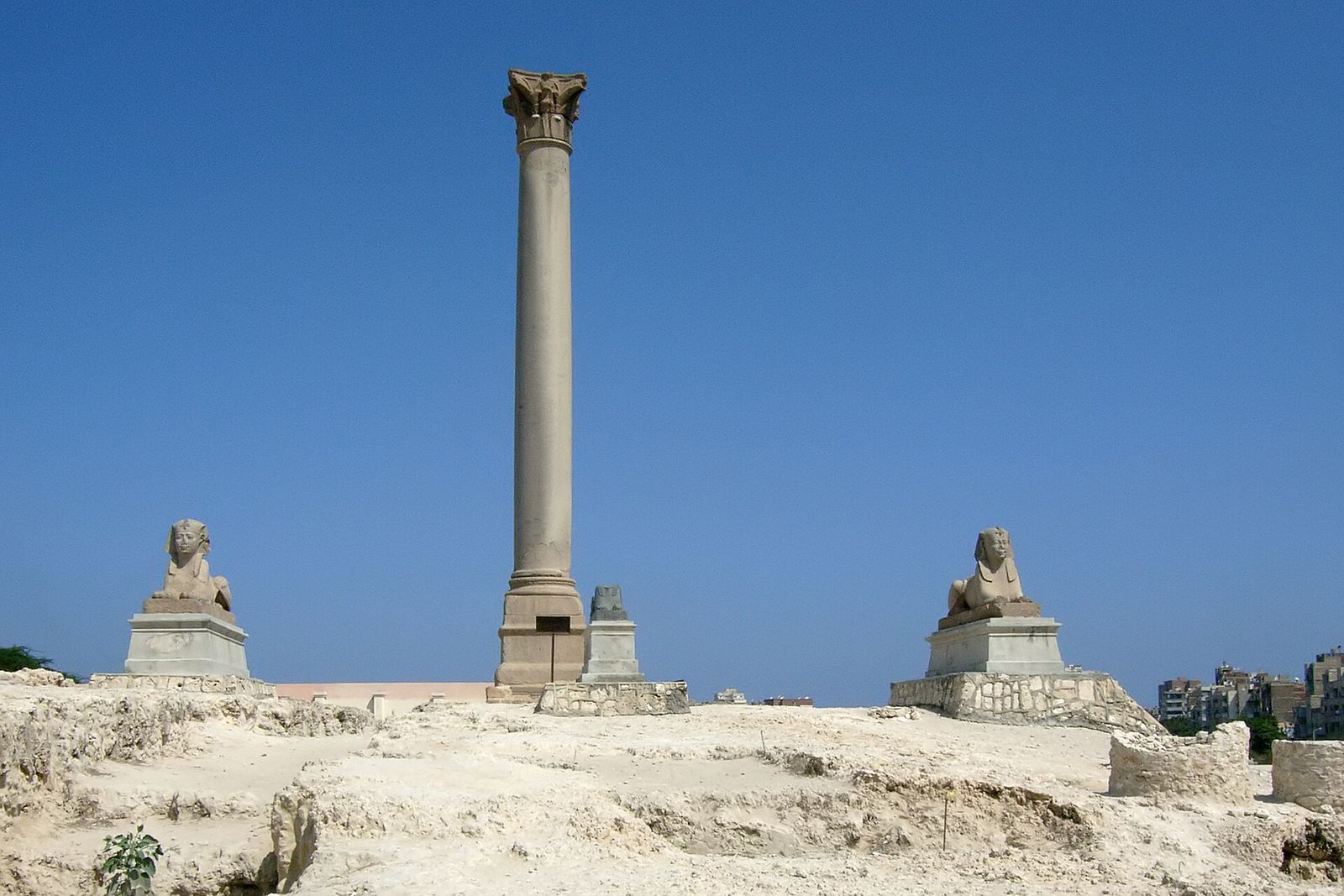
A single column of red Aswan granite on the hill of Bab Sidra, between two sphinxes.
- 1The column and its capital
- 2The two sphinxes
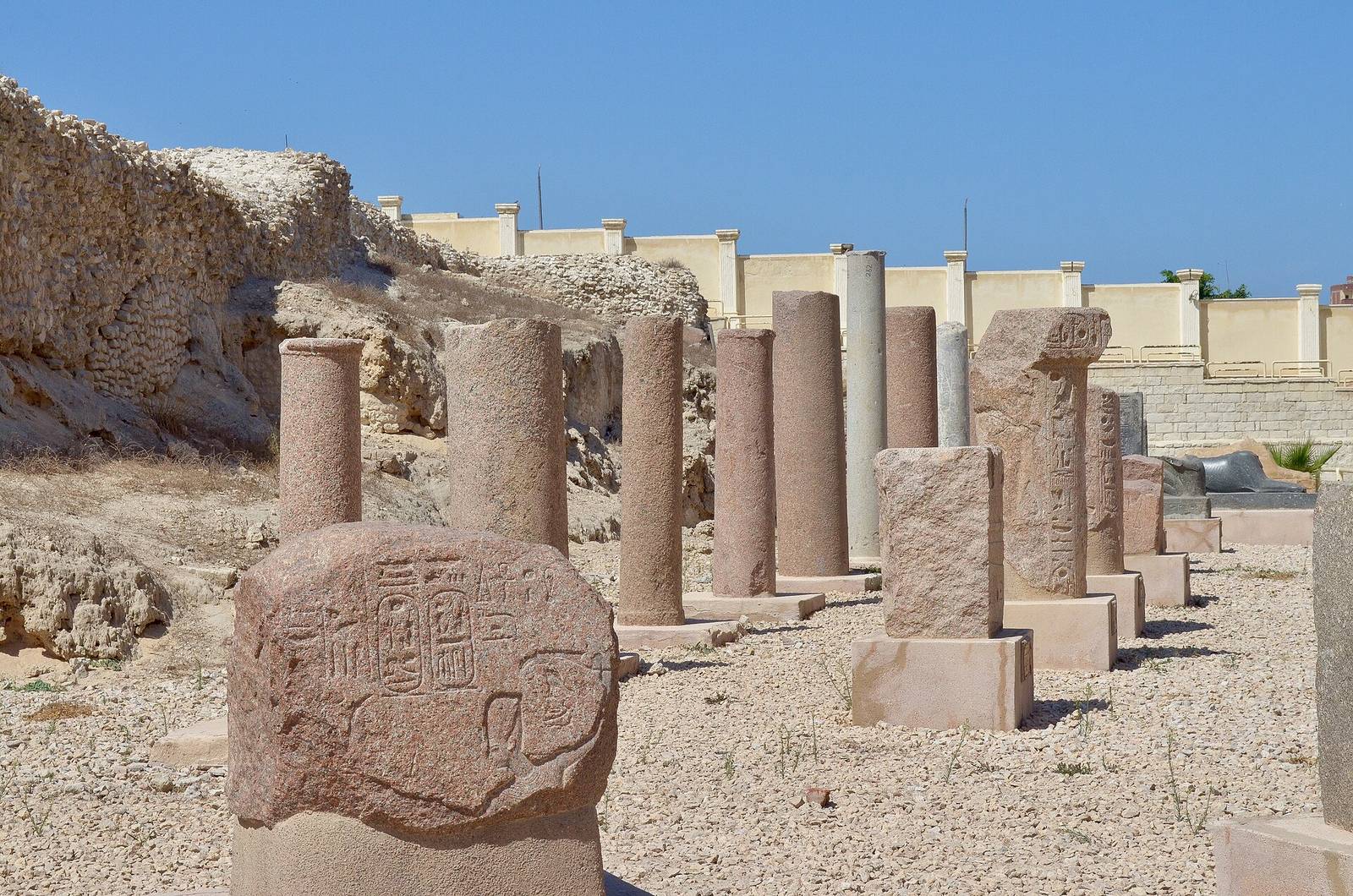
- 3The granite blocks and column drums in the display area
- 4The hill of Bab Sidra
The Alexandria Governorate says Pompey’s Pillar stands on the hill of Bab Sidra, between the Muslim cemetery known as “El Amoud” and the ancient plateau of Kom El Shoqafa, on the very site of the village of Rhakotis.
Read more
The governorate adds that the column has been wrongly called after Pompey since the Crusades, and that the Alexandrians most likely raised it for the Roman emperor Diocletian, in thanks to him. Al-Ahram Weekly (2025) says it was hewn from red Aswan granite in the 3rd century AD and is the tallest surviving Roman triumphal column in the world.
According to the governorate, the shaft is a single piece 20.75 metres long, 2.70 metres across at the base and 2.30 metres at the capital; with its base the column stands about 26.85 metres high.
The visitors’ guide on West District’s page says the site was the Serapeum, one of the best known Ptolemaic temples, for the cult of Serapis, Isis and their son Harpocrates. In 2025 Al-Ahram Weekly reported electronic ticket machines and improved visitor routes at the site.