

Places of worshipThe Islamic centuries

Sidi al-Qabbari Mosque

A mosque over the tomb of the ascetic Sheikh Abu al-Qasim al-Qabbari, who died in 662 AH (1264), enlarged in the 19th century; the El Qabbari area is named after him.

The story

What sets it apart

An ascetic’s tomb in his garden west of the city, with a 19th-century minaret and dome.

  • 1The tomb of Sheikh al-Qabbari
  • 2The 19th-century minaret and dome
  • 3The story of Baybars and the sheikh

The Alexandria Governorate’s landmarks page says Sheikh al-Qabbari’s mosque stands in western Alexandria, in the area known by his name, El Qabbari, in West District. Al-Qabbari was the ascetic Sheikh Abu al-Qasim Mohamed ibn Mansour ibn Yahya al-Maliki of Alexandria, born in 587 AH (1191); he died in the house he had built in the middle of his garden and was buried on its western side on 6 Shaaban 662 AH (1264).

Read more

The same page tells, after the historian Ibn Wasil, how Sultan Baybars visited him in his garden and asked whether he needed anything, and the sheikh answered: “I want you to see to the fortifying of Alexandria.”

A small mosque was raised over his tomb and enlarged in the 19th century, the work to which the minaret and the dome belong. The landmarks page credits the enlargement to Mohamed Said Pasha; the visitors’ guide on the district’s page credits Mohamed Ali Pasha.

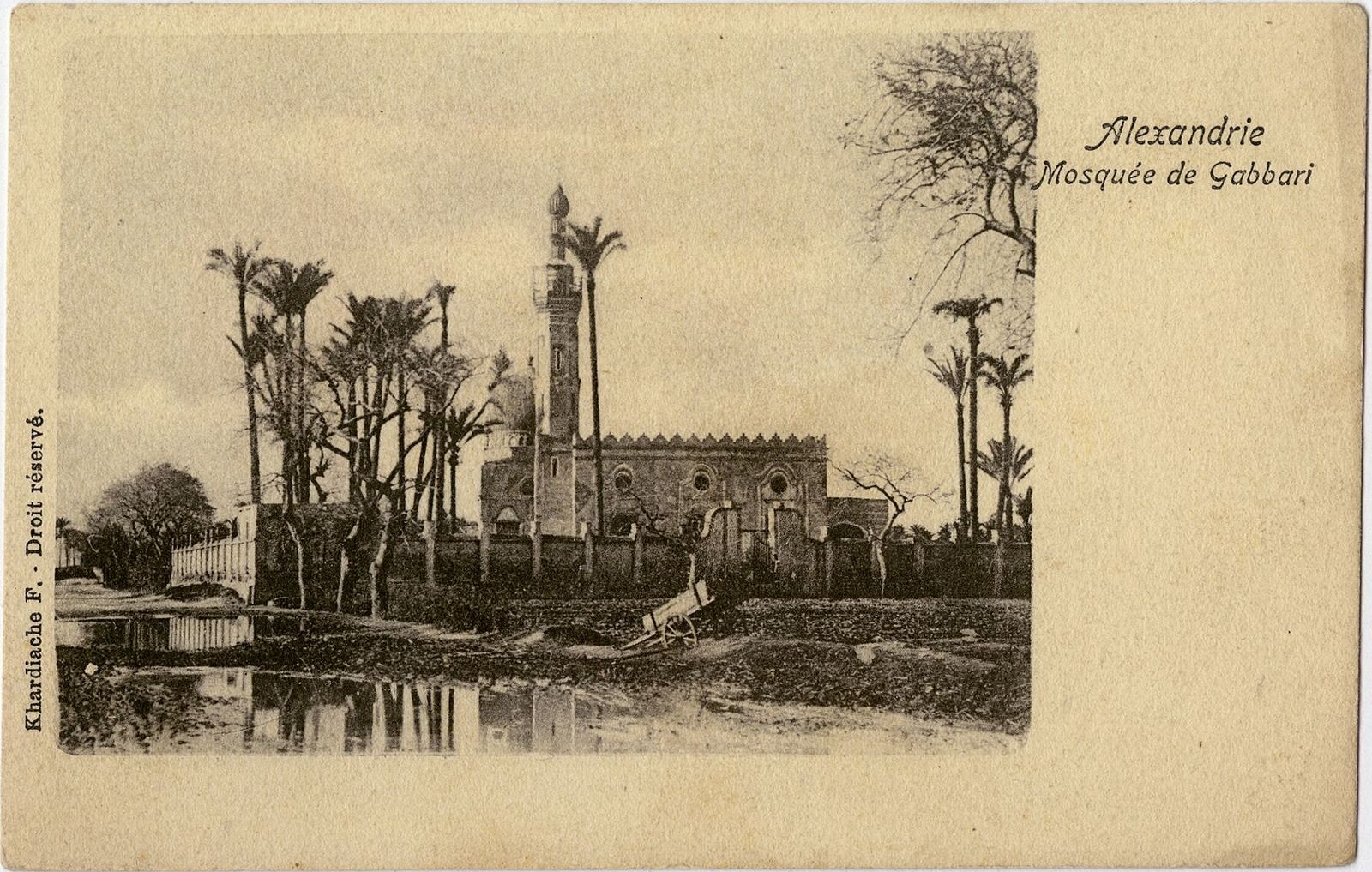
The picture here is a historic postcard of about 1900, published by “Khardiache F.” as “Mosquée de Gabbari”, showing the mosque with its crenellated walls and minaret among palms. The card does not name the saint, but what it shows matches the governorate’s description.
The Islamic centuries7th century – 1850

Its place in time

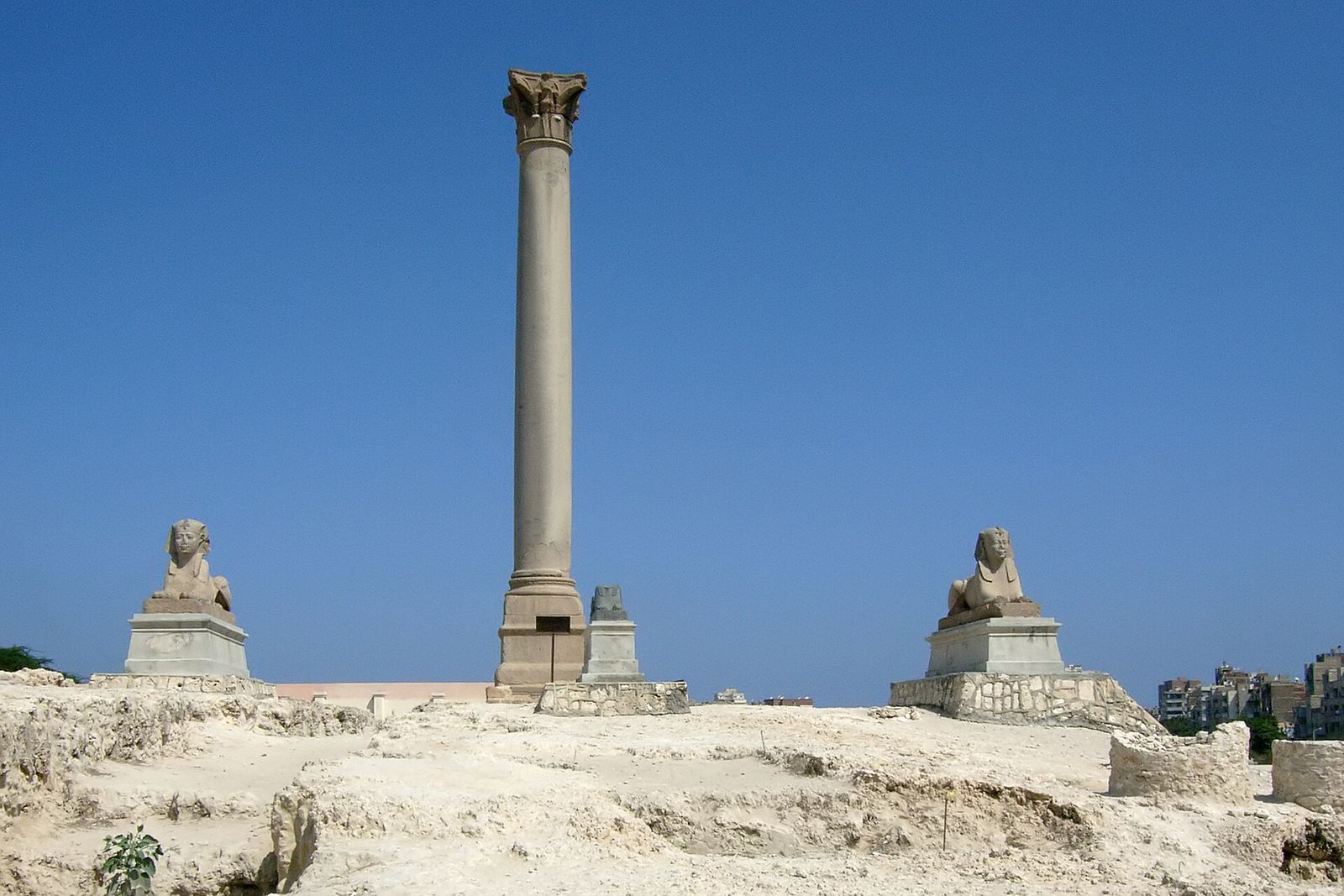
  1. Before itPompey’s Pillar and the SerapeumAbout AD 300, on the site of the Ptolemaic Serapeum
  2. This landmarkSidi al-Qabbari Mosque1264 (662 AH), enlarged in the 19th century
  3. After itMina El Basal Cotton ExchangeThe 1870s

On the timeline of all the landmarks

Memories of the place

Every memory is taken from a published, documented source, named under it.

  1. 1191 (587 AH)

    Birth of the ascetic Sheikh Abu al-Qasim Mohamed ibn Mansour ibn Yahya al-Maliki of Alexandria, known as al-Qabbari.

    Source: Alexandria Governorate, «معالم الإسكندرية»: مسجد سيدي القباري (archived 2 Jul 2015)

The other memories 4
  1. Baybars’s visit

    Sultan Baybars visited him in his garden and asked whether he needed anything; he answered, “I want you to see to the fortifying of Alexandria”, as the historian Ibn Wasil tells it.

    Source: Alexandria Governorate, «معالم الإسكندرية»: مسجد سيدي القباري (archived 2 Jul 2015)

  2. 6 Shaaban 662 AH (1264)

    The sheikh died in his house in the middle of his garden and was buried on its western side; a small mosque was raised over his tomb.

    Source: Alexandria Governorate, «معالم الإسكندرية»: مسجد سيدي القباري (archived 2 Jul 2015)

The other memories2
  1. 19th centurySources differ on this date

    The mosque was enlarged, the work to which its minaret and dome belong. The landmarks page credits Mohamed Said Pasha; the district’s guide credits Mohamed Ali Pasha.

    Source: Alexandria Governorate, «معالم الإسكندرية»: مسجد سيدي القباري (archived 2 Jul 2015)

  2. About 1900

    “Khardiache F.” published a postcard titled “Mosquée de Gabbari”, showing the mosque with its crenellated walls and minaret among palms.

    Source: Bibliothèque nationale de France, via Wikimedia Commons: «Alexandrie. Mosquée de Gabbari», Khardiache F. postcard (about 1900)

Around it

  • This landmark
  • A landmark nearby: open it

Map: © OpenStreetMap contributors